Enforce your process on every piece of content
Model approval workflows, rules and event-driven behaviors, and put AI services to work on repetitive editorial tasks so your teams can focus on the work that matters.
Key features
-
Workflow
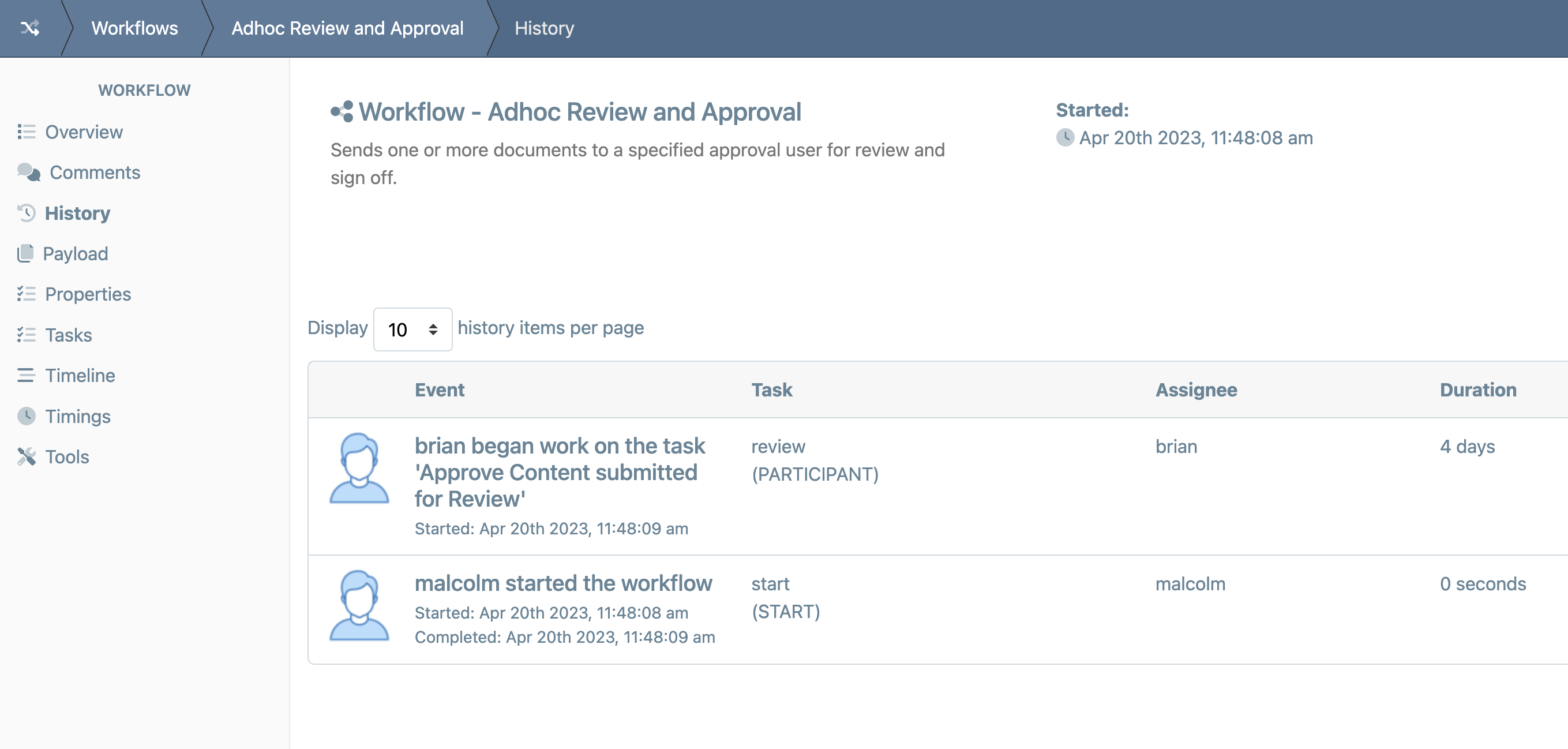
BPM models route content through review, approval and publishing.
-
Sidekicks and procedures
AI assistants run scripted, multi-step tasks in branches you review.
-
AI services
Classification, recognition, transcription and translation keep metadata current.
Workflow
Model how content moves between teams with business process management (BPM), and let the engine route, track and enforce it.
-
Models
BPM models defined in JSON describe multi-stage flows and multi-document routing that respect access policies and roles.
-
Collaboration
Tasks are created and assigned to users and groups (pooled tasks), automatically tracking due dates, progress and raising awareness of bottlenecks. Users claim and delegate tasks to work efficiently.
-
Decision logic and handlers
Workflows execute decision logic, routing documents based on in-flight calculations. Handlers run as documents move between states: web hooks, email and Slack notifications, and generative AI functions.
Sidekicks and procedures
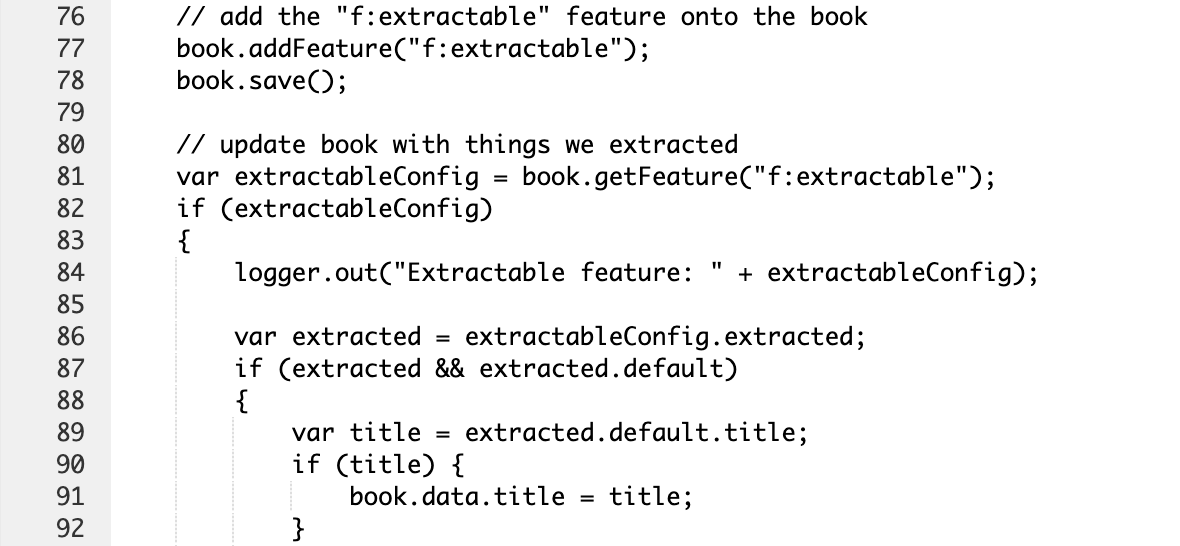
Sidekicks are AI assistants that take on repetitive, multi-step work. Procedures, written in server-side JavaScript with JSON Schema entry forms, tell them what to do.
-
Work in isolated branches
A sidekick does its work in a branch and hands it back for editing and approval, so nothing ships unreviewed.
-
Scriptable procedures
Parameterized procedures package complex worker tasks behind an entry form that editors or sidekicks can run, including drafting multi-document deliverables with generative AI.
-
Orchestration
Editors run several sidekicks at once, then cherry-pick the best contributions and merge them into the final deliverable.
AI services that keep metadata current
Model your content to call AI services as it changes. Results are written to the content as JSON, indexed for search and routed through workflow for approval.
- Classification
- Assign content to versioned taxonomy hierarchies as other services analyze it, or tag by drag and drop. Import industry taxonomies such as medical and automotive.
- Generative AI
- Write new content to a target length, audience and voice, or generate summaries, key points and questions and answers from a selection.
- OpenAI, Google and other providers
- Image recognition
- Detect faces, landmarks, text, labels and moderation concerns in images, shown as overlays in the editor and fed into classification.
- Optical character recognition
- Extract text from scanned and hand-written documents as they arrive by scanner or email, index it for search and trigger rules on what it says.
- Text analysis
- Find entities, labels and sentiment in properties and attachments, and flag moderation concerns.
- AWS Comprehend and OpenAI
- Text to speech
- Generate voice renditions of attachments, properties or fragments of text, and approve them through workflow before they ship.
- AWS Polly, Google and Azure text-to-speech
- Transcription
- Turn audio into text that stays in sync as the audio changes, stored on the content as JSON.
- AWS Transcribe, Azure and OpenAI Whisper
- Translation
- Generate translations into target locales that stay in sync with the master document and move through approval together.
- AWS, Google, Azure and OpenAI translation
See Gitana with your own contentRun that merge on your own content
Bring one of your own content types. A solutions engineer will model it, branch it and deliver it with you, hosted in our cloud or running in yours.Bring one of your own content types. A solutions engineer will model it, branch it, merge a rights change and deliver it to an agent with you, hosted in our cloud or running in yours. The same call covers architecture, security, deployment and procurement questions.